
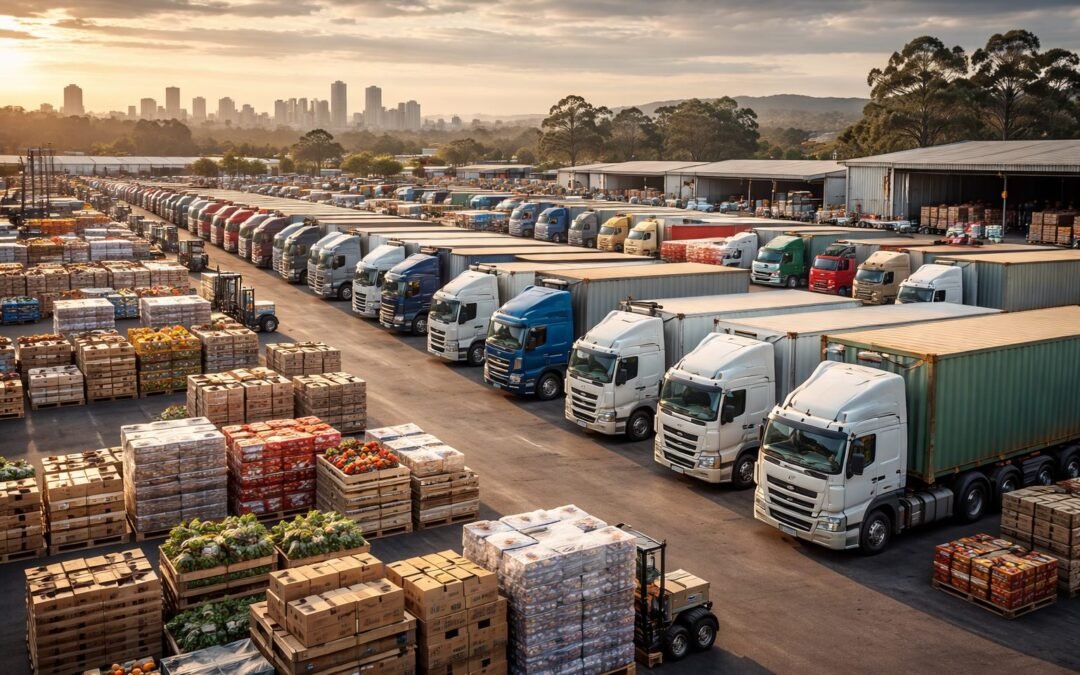
Global supply chains normally operate so smoothly that most of us rarely think about them. Ships arrive, refineries run, trucks move goods around the country, and service stations are always stocked. The system works because thousands of moving parts operate in a continuous rhythm.
Occasionally, however, an event occurs that raises questions about how resilient that rhythm really is.
Here’s a breakdown of how and why we are vulnerable to things that happen on the other side of the world:
1. Australia Is at the End of the Fuel Supply Chain
Most major economies sit near production or refining centres.
Australia sits near the end of the logistics chain.
The simplified structure looks like this:
Middle East crude
↓
Asian refineries
↓
regional fuel trading hubs (Singapore)
↓
export cargoes
↓
Australia
2. Australia Imports Refined Fuel, Not Just Crude
Countries like the US, China and much of Europe import crude oil but refine it domestically.
Australia largely imports finished fuels:
- diesel
- petrol
- jet fuel
This means Australia depends on two supply chains instead of one:
- crude oil supply to Asian refineries
- refined fuel exports from those refineries.
If either chain breaks, Australia loses supply.
3. Australia Has Very Limited Refining Capacity
Australia once had many refineries.
Now only two remain:
- Geelong
- Lytton
Together they produce only a portion of national demand.
This means Australia cannot easily compensate for lost imports.
In contrast:
- the US has ~130 refineries
- Europe has dozens
- China and India have massive new refining capacity.
4. Australia Has Very Low Strategic Fuel Reserves
International Energy Agency guidance:
90 days of fuel reserves
Australia typically holds about:
- 30–35 days
And that includes:
- fuel in transit
- fuel stored offshore.
Countries with larger reserves can ride out disruptions much longer.
5. Australia Is a “Spot Market” Buyer
Large economies secure fuel through:
- long-term supply contracts
- national oil companies
- sovereign purchasing power.
Australia relies heavily on commercial spot markets.
In a supply crunch:
- large buyers secure supply first
- smaller markets get squeezed.
This is exactly what happened during previous energy shocks.
The Result
When global oil logistics tighten, the typical order of impact is:
- smaller import-dependent markets
- countries at the end of shipping routes
- spot-market buyers.
Australia fits all three categories simultaneously.
Historical precedent
During previous disruptions:
1970s oil crisis
Countries like Japan and Australia faced fuel restrictions earlier than the US.
2022 diesel shortages
Regional markets experienced supply gaps before larger economies.
The pattern is consistent.
The paradox
Australia actually exports large amounts of crude oil and energy resources, yet it imports most of its usable fuel.
This paradox exists because:
- Australian crude is exported to refineries overseas
- refined fuel is then imported back.
It is efficient under stable conditions but fragile during logistics disruptions.
The key takeaway
The real vulnerability is not oil supply.
It is logistics dependence.
Australia relies on a system where:
- tankers must move continuously
- refineries must run continuously
- shipping lanes must remain open.
When that chain slows, Australia feels the effects earlier than most major economies.
Cascade Timeline for Australia
Days 1–14 — Price Shock
- oil prices surge
- diesel and petrol prices spike
- freight surcharges appear
- panic buying possible.
Days 14–35 — Supply Tightening
- refinery run cuts reduce fuel exports
- diesel imports tighten
- mining and freight companies draw down reserves
- government begins contingency planning.
Days 35–60 — Allocation Pressure
If disruption persists:
- diesel allocation decisions required
- freight capacity declines
- regional fuel shortages emerge
- agriculture and mining operations adjust output.
Days 60+ — Systemic Stress
If tanker flows remain disrupted:
- diesel rationing likely
- freight capacity sharply reduced
- remote communities face supply disruptions
- GDP contraction likely.
Probabilistic Scenario Assessment
Based on current shipping data and historical maritime crisis behaviour.
| Scenario | Duration | Probability | Characteristics |
|---|---|---|---|
| Rapid stabilisation | <2 weeks | 30% | Naval escorts restore insurance confidence, tanker traffic resumes quickly. |
| Medium disruption | 1–2 months | 45% | Tanker flows partially restored but logistics remain constrained. Some refinery run cuts. |
| Prolonged disruption | 3+ months | 25% | Persistent maritime insecurity forces global energy rerouting and supply chain restructuring. |
Combined probability of disruption exceeding one month:
≈70%.
Strategic Implications for Australia
If the disruption persists:
- diesel becomes the first rationed fuel
- freight capacity declines
- regional supply chains weaken
- mining and agriculture output falls
- inflation increases rapidly.
The most likely near-term outcome is price shock and supply tightening, not total fuel collapse.
However Australia remains structurally exposed to prolonged maritime disruption.